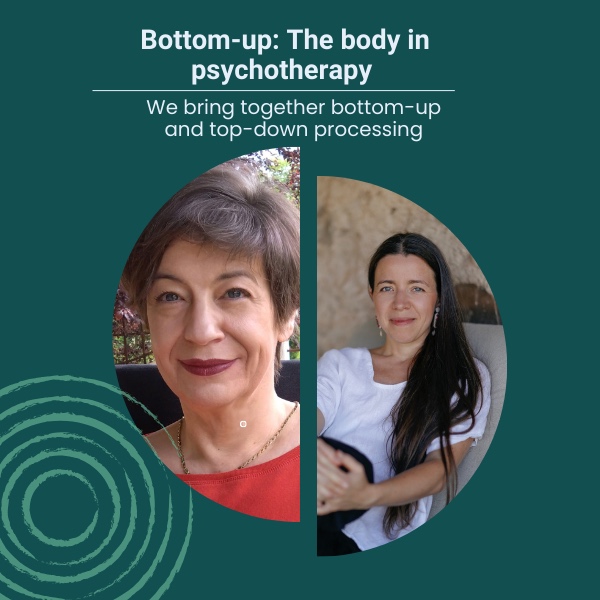
The first time this condensed and applicable format is delivered in Romania.
-
Concentrated program, designed for therapists with active clinical practice
-
Bottom-up and top-down integration, designed to be directly applicable in your practice
-
concentrated program based on essential landmarks in working with the body
-
time & cost efficient, only 8 months of training
Concentrated program, designed for therapists with active clinical practice
Bottom-up and top-down integration, designed to be directly applicable in your practice
concentrated program based on essential landmarks in working with the body
time & cost efficient, only 8 months of training
Administrative details
Event dates 2026
May 8-10
July 3-5
September 18-20
December 18-20
Location
Bucharest, Central (exact location coming soon, we are searching for the perfect space)
Included in the price
12 days of physical training in Bucharest
12 hours of online group supervision
Trainers
𝑪𝒉𝒓𝒊𝒔𝒕𝒊𝒏𝒂 𝑩𝒐𝒈𝒅𝒂𝒏𝒐𝒗𝒂 - psychotherapist, neo-Reichian analyst trainer and supervisor, Somatic Experiencing® practitioner
𝑨𝒈𝒏𝒆 𝑫𝒊𝒄𝒊𝒖𝒕𝒆 - body-oriented Gestalt psychotherapist, EAGT-certified supervisor, trained in Somatic Experiencing®, Conscious Dance practitioner

You are already doing well, but there are processes related to the body and nervous system that you have not covered in your training
You have undergone solid training that you feel represents you and you work efficiently.
However, most training courses in verbal (classical) psychotherapy only touch tangentially on systematic work with the body and regulation of the nervous system, even though these processes are active in the practice, whether we name them or not.
In your practice, you have encountered:
- clients who become physically active or blocked without being able to put into words what is happening to them
- clients who understand very well what is happening to them but are unable to integrate lasting changes
episodes of dissociation, hyperarousal, or collapse that do not respond to the interventions you are used to - situations where you “know what to do,” but the client’s body is in a different rhythm
- the difficulty of dosing interventions without overwhelming or re-traumatizing
- your own somatic reactions after sessions: tension, fatigue, residual activation
For many therapists, these moments occur precisely when their practice begins to deepen.
These situations are not due to a lack of competence, but to the fact that the nervous system needs to be understood and addressed directly, not just translated into words.
What makes this program different?
-
it's a condensed program designed to integrate new skills into your current practice
-
It emphasizes clinical safety, dosing interventions, and reading somatic signals
-
It explicitly links working with the body and nervous system to verbal psychotherapy, rather than treating them separately
-
has a clearly defined duration - 8 months, with no extensions or additional steps
-
is practice-oriented, with direct applicability in real situations in the office
-
is designed to complement the skills acquired in initial training
it's a condensed program designed to integrate new skills into your current practice
It emphasizes clinical safety, dosing interventions, and reading somatic signals
It explicitly links working with the body and nervous system to verbal psychotherapy, rather than treating them separately
has a clearly defined duration - 8 months, with no extensions or additional steps
is practice-oriented, with direct applicability in real situations in the office
is designed to complement the skills acquired in initial training
What does the program structure look like?

The program is organized into four progressive modules that gradually build the capacity to integrate somatic work into verbal psychotherapy in a safe, coherent, and clinically applicable way.
Module 1 – Foundations: neurophysiology, somatic awareness, and stabilization
The basics of working with the nervous system: the difference between stress, traumatic stress, and PTSD, understanding the window of tolerance and states of arousal, developing the capacity for body awareness, stabilization, and anchoring in the here-and-now experience. Introduction to patterns of muscle tension, with demonstrations and practical exercises.
Module 2 – Trauma, defenses, and motor patterns
Exploring shock trauma and developmental trauma, adaptation processes, and associated bodily responses. Working with shame, boundaries, and consent in a therapeutic context, with an emphasis on observing bodily signals and maintaining a safe pace for the therapeutic process.
Module 3 – Working with Trauma: Memory and Dissociation
Understanding memory systems and traumatic memory, as well as dissociation phenomena in a clinical context. Exploring how traumatic material may arise in the therapeutic process and the principles that support safety, prevent the risk of overwhelm, and support regulation throughout the therapeutic process.
Module 4 – Integration
Integrating the somatic dimension into verbal-analytic psychotherapy by articulating bottom-up and top-down approaches in clinical practice.
Training days
1
supervision hours
1
participants
1
training months
1
About the program
It's for you if...
...you learn best through personal and group experience
ooo
See on the back
You need to...
...feel in your own body what a "bottom-up" approach looks like, how somatic experience is organized, and what internal regulation means, not just as a concept.
Write us a question about this...your basic training is verbal
ooo
See on the back
You have already covered...
...one or more long-term training courses in psychotherapy and you have a solid theoretical and clinical foundation, but you feel that working with the body has been approached rather tangentially.
Write us a question about this... you are interested in working with trauma and integrating somatic aspects
ooo
See on the back
You know that...
...the somatic dimension is important in the therapeutic process, but it is not yet very clear to you how to bring it into your practice in a way that is safe, ethical, and consistent with your values.
Write us a question about thisIt's not for you if...
...you are in the early years of your training
ooo
See on the back
This program is based on the premise...
... to clinical practice that has already begun. It is not an introduction to psychotherapy and does not cover the basics of clinical work.
Write us a question about this...you are looking for a program based on a standard protocol
ooo
See on the back
This program will help you...
...understand what makes sense for you, how this perspective fits with your therapeutic style, and how it can be brought into your practice in an authentic and personalized, non-standard way.
Write us a question about this... you want comprehensive training in somatic therapy, separate from verbal therapy
ooo
See on the back
This program is not a complementary training course.
Working with the body is integrated into the therapeutic relationship and the verbal process, not taught as an autonomous or parallel method.
Write us a question about thisHow did the idea for this program come about?
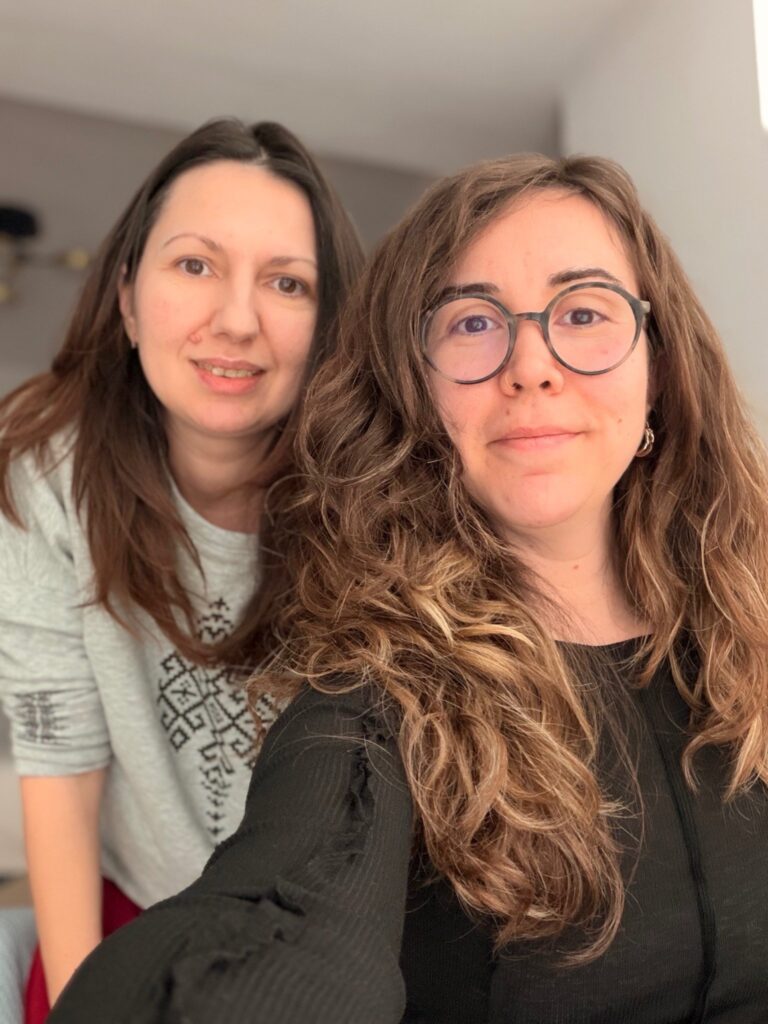
The idea for this program arose from a real professional need that we (Corina and Andreea) have, which we know many psychotherapists recognize. Our profession requires a long and rigorous process of training, supervision, and specialization—an essential and valuable process. However, with clinical experience comes the natural need to expand one’s practice and better respond to increasingly complex situations in the office.
Often, deepening one’s knowledge means retaking a complete training course over a long period of time, as if starting from scratch. We wanted a different framework: continuous training that respects the clinical experience already accumulated and offers clear, applicable guidelines that each psychotherapist can integrate into their own working style.
This need led to the decision to create a program focused on integrating work with the body and nervous system into verbal psychotherapy, precisely in areas where, in everyday practice, verbal communication is no longer sufficient.
This professional motivation was complemented by a personal one. Recent experiences have brought us into direct contact with the limitations of exclusively verbal therapy in contexts of intense stress, exhaustion, or nervous system dysfunction. It has become clear that sometimes concrete, measured, and intentional interventions are needed that include the body and neurophysiological processes.
At the same time, we began to notice more clearly the impact of our work in the office on our own bodies: tension, deep fatigue, residual activation after sessions. All of these are part of the regulation and co-regulation processes that inevitably occur in the therapeutic relationship and need to be understood and supported.
The program thus arose from a dual need: clinical and personal. It is designed to be time-efficient and cost-efficient, to respect the level of competence of the participants, and to provide a coherent and applicable framework for integrating work with the nervous system into verbal psychotherapy. It does not promise quick fixes, but rather the development of a more confident and conscious ability to work with the living processes that unfold beyond words—both in clients and in ourselves.
Who are the trainers?
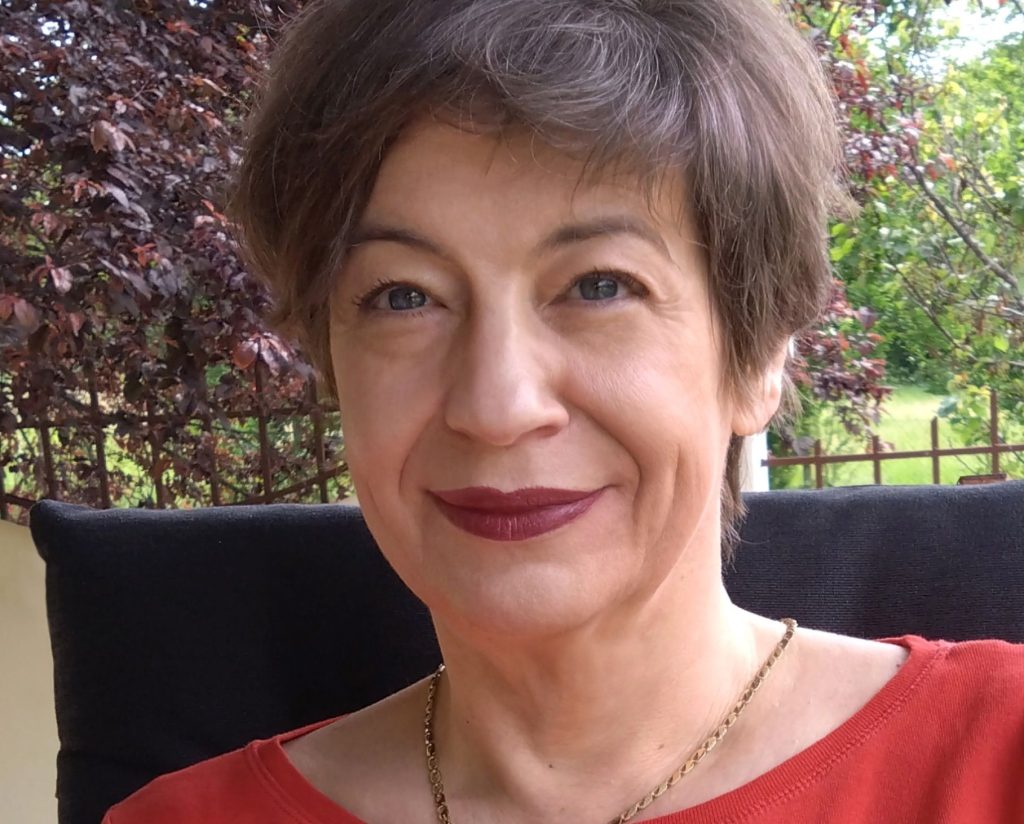
Christina Bogdanova
Christina Bogdanova is a body-oriented neo-Reichian analytical psychotherapist and Somatic Experiencing® practitioner with a private practice in individual and group work.
She is also a trainer and supervisor at the Institute of Neo-Reichian Analytical Psychotherapy, where she teaches and facilitates training in trauma work.
Her professional training is extensive and coherent, focused on understanding the relationship between the body, the nervous system, and deep psychological processes. She completed a four-year specialization in Five Movement Therapy—an analytical, body-oriented psychotherapeutic approach in the Neo-Reichian tradition—as well as a three-year specialization in Somatic Experiencing®, a neurophysiological method of trauma treatment. Her background also includes in-depth training in NeuroAffective Touch, for working with developmental trauma, as well as in Somatic Sexuality Healing, a body-oriented approach to difficulties related to sexual trauma, embodiment, and the experience of sexuality. She also has professional training in Somatic Trauma Therapy.
In clinical practice, Christina works with a wide range of difficulties, from anxiety and panic, depression and professional burnout, to issues of self-image, self-esteem, and relationships. A big part of her work is about bodywork, embodiment, sexuality, and relationship experiences, as well as trauma integration—whether it’s developmental and relational trauma, trauma related to violence (physical, sexual, or emotional), accidental events, or medical interventions.
Christina Bogdanova
Agne Diciute
Agne Diciute is a body-oriented Gestalt psychotherapist and EAGT-certified supervisor, trained in Somatic Experiencing® and conscious movement work. She works in Tuscany and collaborates internationally in individual therapy, supervision, and group training with therapists from different cultural backgrounds.
She is particularly interested in how working with the body and the nervous system can be integrated into verbal psychotherapy without losing clinical and relational rigor. In her work with therapists, she emphasizes developing the ability to monitor the states of the nervous system—both in the client and in oneself—self-regulation and co-regulation in the therapeutic relationship, and the use of somatic interventions in a subtle, measured, and safe way.
Her approach is integrative and deeply practical: theory is always put into dialogue with direct experience, and trauma work is anchored in presence, contact, and respect for the rhythm of each process. The training and supervision facilitated by Agne create a space in which therapists can better understand what happens “behind the words” in the office and can integrate this level into their daily clinical practice in a coherent and trauma-informed way.
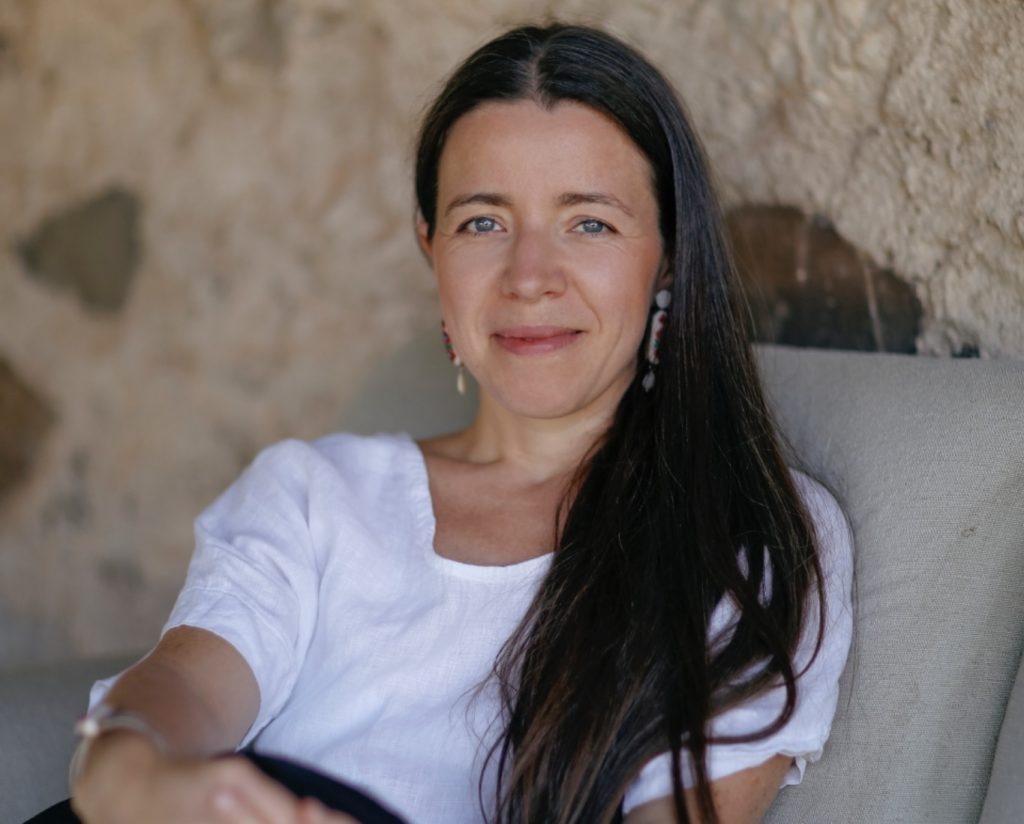
Agne Diciute
REGISTRATION
What is the registration process?
Fill out the form
It is a little more detailed, at the request of the trainers, so that we know as clearly as possible who it is aimed at. We want to make sure, first of all, that our intentions and expectations match.
1
We will get back to you with a confirmation email.
In which we will also send you the draft training contract.
2
Send us the documents proving that you meet the selection criteria.
Certificate of practice/diploma of completion of complementary training in psychotherapy
3
Let's talk for a quick 20-minute call.
It is important to us that this program fits your professional path and the stage of your career.
4
You pay the advance payment
25% of the program cost. If you are unable to participate for personal reasons, the advance payment is non-refundable. The remaining amount will be paid in three equal installments.
5
Registration deadline: March 30, 2026
Total cost of the program: 11,800 RON
➜
30% discount LAUNCH PRICE - pilot edition
➜
YOUR PRICE: 8200 RON until March 31, 2026
after April 1, 2026 ➜
9000 RON
Limited to 30 places: this edition is designed as an applied workspace, with direct feedback and clinical integration.
Frequently asked questions
Details about structure, schedule, payments, and more
Who are the organizers?
Corina Ștefan
My clinical practice focuses on relational psychotherapy and the integration of bottom-up and top-down interventions in verbal work with clients. I am particularly interested in regulating the nervous system in a relational context, working with trauma, shame, and dissociation processes, as well as how the body can be included in a subtle and ethical way in verbal psychotherapy, without forcing or dramatizing the experience. I work with an emphasis on clinical relevance, personal integration, and the development of a lively therapeutic presence that supports safety, contact, and the real process, not performance.
Andreea Ghițoiu
Attachment and the way we are deeply shaped in our early relationships have always been topics of research and interest for me. What happens to our relational needs, how do we bring them into meaningful relationships throughout our lives? All of these are at the center of my concern and therapeutic relationship. In recent years, with the experience of motherhood, my curiosity has increasingly turned to understanding the nonverbal, bodily dimension of relationships. And how the body can be a map that carries both these early imprints and the meaning and resources for change.
What is this program?
It is an 8-month continuing education program dedicated to integrating work with the body and nervous system into verbal psychotherapy. The program is designed to build on participants’ existing clinical experience and provide essential guidelines for integrating bottom-up and top-down working methods into the therapeutic process.
Who is this program for?
This training is aimed at therapists who are in the process of consolidating their clinical practice.
The minimum level of experience required is the final year of training and having already started working actively with your first clients.
The program requires commitment, openness to reflection, and a willingness to work at a sustained pace, with respect for the process, the framework, and the other participants. It is a space designed for professionals who are building their long-term practice and seeking greater security and consistency in their clinical work.
What skills will you acquire?
- The ability to maintain therapeutic presence and contact in situations of heightened arousal;
- Maintaining a steady pace in the therapeutic process and accessing the client’s internal resources;
- Better clinical orientation in working with dissociative phenomena;
- Understanding the dynamics of hyperarousal and hypoarousal and how they can be clinically supported;
- Integrating the bodily and relational dimensions in working with shame;
- Establishing, negotiating, and respecting boundaries in the therapeutic relationship
- Working clinically with “Yes,” “No,” and “I don’t know”
- Reading bodily signals and patterns of muscle tension
- Supporting the integration of traumatic experiences within the verbal therapeutic process;
What will you receive as part of the program?
A structured training process that combines theory with direct experience and clinical integration:
72 hours of intensive, face-to-face workshops
12 hours of online group supervision
access to international trainers
A total of 84 hours of training, conducted at a pace that can be sustained alongside your professional practice.
How do we work within the program?
Learning takes place through reflection, experimentation, and gradual integration:
- theoretical presentations and visual support
- live demonstrations
- guided exercises (individual, in pairs, and in groups)
- group supervision between modules
Conscious movement and dance, for regulating the nervous system.
How is the program structured for the training days?
Each module takes place over three days (Friday–Sunday).
In May and December, the schedule is as follows:
Friday 3:00 p.m.–6:30 p.m. ·
Saturday 9:00 a.m.–6:00 p.m. ·
Sunday 9:00 a.m.–2:00 p.m.
In July and September, the training days are full days:Friday–Sunday 9:00 a.m.–6:00 p.m.
What is your investment?
Early bird: 8,200 RON (valid until March 31, 2026)
Based on a full year, the investment is approximately
680 RON/month
Standard price: 9,000 RON
How is payment made?
In order to support the organization of the program and to be able to distribute the costs throughout the year, payment is made in stages:
2,500 RON – advance payment to reserve your place
1,900 RON – before Workshop 1 (by April 30)
1,900 RON – before Workshop 2 (by June 20)
1,900 RON – before Workshop 3 (by September 10)
The advance payment confirms your place in the group and is non-refundable, as it covers organizational costs incurred at this stage.
In what language is the program conducted?
The program is conducted exclusively in English, without simultaneous translation.
A functional level of understanding (B2) is required.
For specific clarifications, support can be provided in the room when needed.
How many places are available?
The group is limited to 30 participants in order to maintain a safe and focused working environment.
Is the program accredited?
No. The program does not offer credits from the College of Psychologists.
Take the next step: integrating somatics into your work with clients
If you recognize yourself in the descriptions above, this program can be a step toward consolidation and clarity in your practice.